
Treatment Information
Retainers After Invisalign: Planning Care After Your Last Aligner
Plan for retainers after Invisalign: understand their role, what to ask about wear and follow-up, and what to do if a retainer breaks or no longer fits.
November 22, 2026
Written byAsok Montri Dental Clinic
Medically reviewed byDr. Song Auttawetchakul
Last reviewed: November 16, 2026
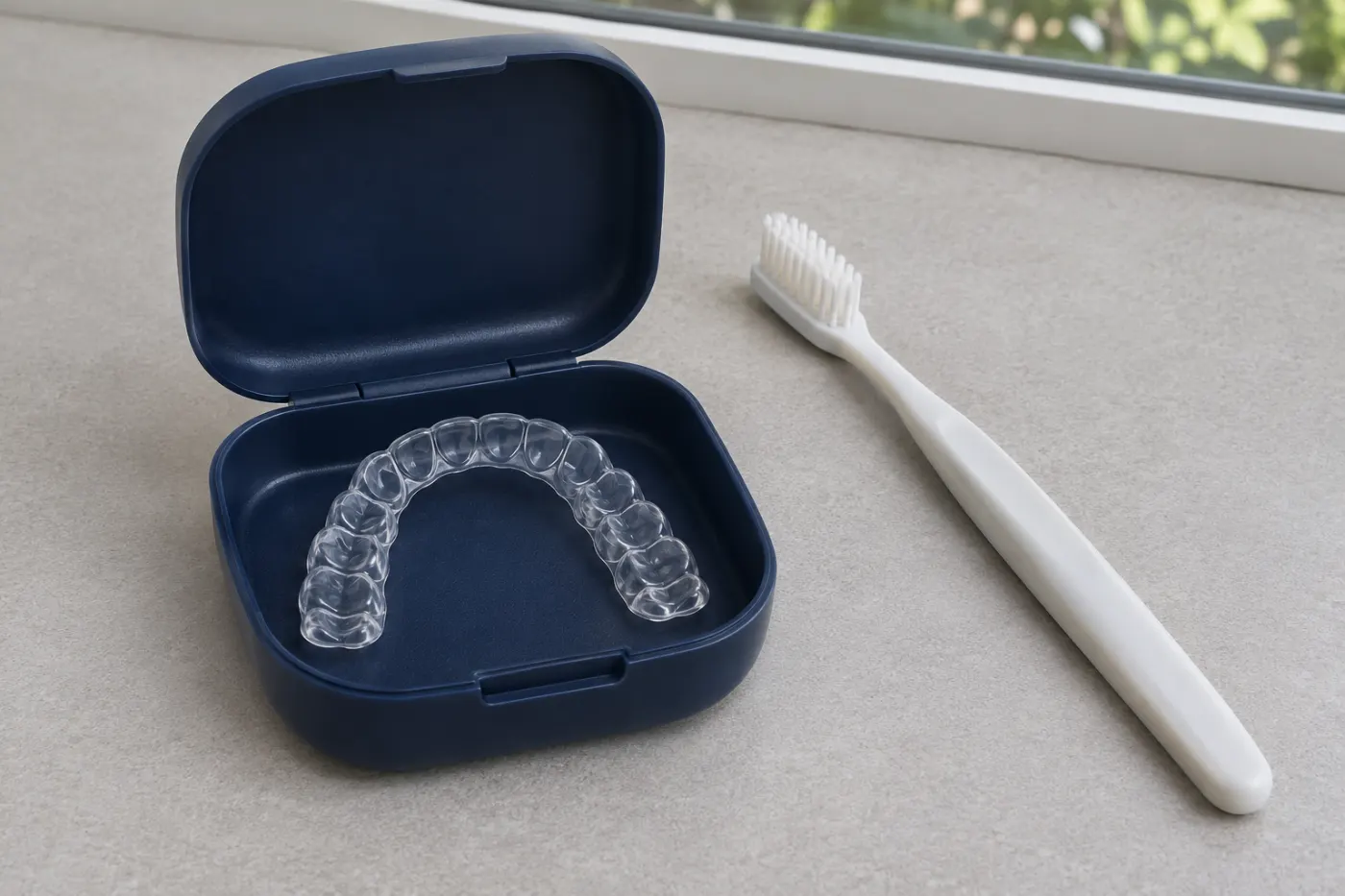
Finishing the last planned aligner does not end the need to look after tooth position. Retainers help hold the result after active orthodontic treatment. Teeth can move again, including as we age, so retention needs a long-term plan. [1]
We encourage you to discuss this before starting Invisalign at Asok Montri Dental Clinic. Knowing what happens afterwards makes the treatment plan, and the budget, easier to understand.
Which retainer will I need?
Retainers can be removable or fixed behind the teeth. Sometimes more than one type is advised. The choice and instructions depend on the patient; a clear removable retainer and a bonded wire are not interchangeable simply because both are called retainers. [1]
Ask which type is proposed for each arch, how it will be provided and who will check it. Do not assume the answer will be identical to a friend's plan or that a particular brand is included.
How often should I wear it?
Follow the schedule given by your treating dentist. Some removable retainers are worn more frequently at first; others may be prescribed for nights from the outset. The British Orthodontic Society recommends continuing retention over the long term, with the individual schedule explained by the clinician. [2]
Before leaving the final treatment appointment, get those instructions in writing. Ask when the next review is due and whom to contact if you are moving away. Your final aligner should not become a substitute for discussing retention.
If the retainer is lost, damaged or no longer fits
Contact the treating team promptly rather than waiting for the next routine visit. A loose bonded retainer needs assessment, and removable retainers sometimes need repair or replacement. [2]
Tell the team when you last wore it normally and what changed. Ask for instructions rather than forcing a poor fit or trying to adjust a wire yourself. Keep the case and any treatment details accessible when travelling.
Check the costs before the final aligner
Is the initial retainer included in your agreed treatment fee?
How many retainers are being supplied?
Are review visits included, and for how long?
What happens if a replacement is needed later?
Our Invisalign service page includes questions about follow-up and retention. Raise them while planning treatment, so the end of active tooth movement has a clear next step.
References
- https://bos.org.uk/patients/retainers/
- https://bos.org.uk/patients/treatments/faqs/
- https://asokmontridental.net/services/invisalign
Have a question?
Our team can talk through your concerns and help you decide what to ask at a consultation.
Appointment enquiryRelated articles
View all
Treatment Information
Is My Mouth Suitable for All-on-4 or All-on-X Implants?
Who may be suitable for All-on-4 or All-on-X dental implants, and when other tooth replacement options may be a better fit.
Read article
Treatment Information
All-on-4 Costs in Thailand: What Shapes Your Quote
Our Bangkok implant team explains what shapes an All-on-4 quote, from one or both arches to restorations, grafting and planned visits.
Read article